Quick Start Self-Defense in Spring, TX: condition1combat.com self defense classes
If you live or work in Spring, you already know the area moves fast. Commutes bend through the Hardy Toll Road, teens crisscross for school sports, and errands tend to push into evening hours. Most days feel routine, until a moment isn’t. That is the hinge where practical self-defense matters, not in theory but in how you carry yourself, what your hands do first, and whether your training holds up under jolts of adrenaline.
Condition 1 Combat Center sits in that practical lane. The school blends striking, clinch work, ground survival, and scenario training into a program engineered for people who have day jobs, kids’ schedules, and not much patience for fluff. If you are searching for condition1combat.com self defense classes, start with a clear picture of what a fast, reliable on-ramp looks like and how to make your first weeks count.
What a true quick start covers
A short runway to self-defense is not a crash course in flashy moves. A tight curriculum focuses on situations you are actually likely to face in and around Spring: verbal harassment outside a restaurant on Louetta, an unwanted grab near a grocery store lot, a clumsy sucker punch at a tailgate, or a fall to asphalt after a scuffle. Each of those scenarios rewards simple, repeatable solutions.
At the foundation, you should be learning three things at once. First, awareness and boundary setting, which includes reading space, setting your stance early, and using your voice to create a buffer. Second, a small handful of strikes that land quickly and reliably, such as palm strikes, hammerfists, elbows, and knee shots to the midline. Third, positional escapes that work when someone clinches, grabs clothing, or drags you to the ground. The common thread is economy. If it takes longer to remember than to perform, it does not belong in week one.
The program at Condition 1 Combat Center uses that filter. On day one you should expect to rehearse a pre-fight posture that looks nonthreatening but shields your head, moves your feet, and keeps your balance. From there, you move to pad work that grooves a few power shots without straining your wrists or shoulders. The finish is usually a controlled drill with a partner, timed so your heart rate climbs while your movements stay crisp. There is little standing around. That pace is on purpose, because a real altercation feels compressed, not leisurely.
How training is structured at Condition 1 Combat Center
The classes run with a consistent arc so beginners do not get lost. Warmups are not punishment; they are mobility and activation tailored to the evening’s focus. If the night emphasizes clinch breaks and takedown defense, you will see hip hinge work, neck strengthening, and footwork patterns. If striking is on the menu, shoulders, wrists, and core get primed to reduce strain.
Technical blocks stack progressively. You will learn the shape of a movement, then apply it against light resistance, then add stress. When students hear “stress,” they sometimes picture chaotic brawling. That is not the method here. Stress comes from time caps, limited vision drills, surprise cues, or safe gear that forces you to track an opponent’s pressure. For example, a partner might wear a belly pad and helmet while you practice defending a two-hand shove into a wall, pivoting out, and landing two quick shots to create exit space.
Sparring policy is measured. New students do not get thrown in. You begin with technical sparring where contact is throttled back and the goal is to read angles, maintain posture, and execute escapes with control. Coaches step in, adjust foot placement or hand position, then send you back in. The result is learning under pressure without collecting unnecessary bruises.
For those interested in broader skills, Condition 1 Combat Center martial arts classes reach beyond self-defense-only sessions. You can train kickboxing, no-gi grappling, or mixed striking and clinch work on different days. The cross-pollination matters. Escaping a grab is one thing, denying the next grip or countering with a takedown of your own takes a bit of grappling literacy. That is built into the rotation.
Your first 30 days, simplified
The people who make rapid progress have a simple plan and stick to it. If you are evaluating self defense classes condition1combat.com and want a quick ignition, use this four-week template.
- Week 1: Attend two beginner-friendly sessions, one focused on striking, one on clinch and breakaways. Learn the ready stance, how to frame with your forearms, and one exit after contact.
- Week 2: Add a third class if schedule allows. Introduce pad rounds with palm strikes and elbows, and rehearse verbal boundary scripts aloud. Begin light positional sparring with strict time caps.
- Week 3: Practice at home for 10 minutes, three evenings. Shadow the ready stance, pivoting out of a corner, and a three-shot combo. In class, add ground survival basics: technical stand-up and retaining guard to stop someone from mounting you.
- Week 4: Test your recall. In a scenario drill, start with your back to a wall, eyes closed. On a cue, cover, frame, move, and exit. Track your breathing. Finish the week with one grappling class to connect your escapes to body mechanics.
Expect to feel clumsy for a bit. Everyone does. The point is momentum, not perfection. By the end of the month, you should reliably hit your stance under stress, keep your chin covered without thinking about it, and move your feet before your hands start swinging.
Skill milestones across a year
From month one to month three, your brain builds maps. Movements that once felt like instructions start to feel like reflex. You will hear your coach say “breathe,” and you will actually do it mid-combo. If you consistently train twice per week, plan on owning a solid hand shield, a quick pivot off the wall, and a technical stand-up that works even on a slick surface. Expect your cardio to improve in a very specific way: short bursts followed by rapid recovery, which mirrors real altercations.
Three to six months usually brings comfort in the clinch and the ability to defend your hips. You will learn to pummel for inside control, block body lock attempts, and break grips on your clothing. This is where many adults feel a turning point. The fear of close contact shrinks because you have reps inside that space. You also start to notice details like wrist alignment on palm strikes and the way your lead foot placement changes your punching lane.
At the one-year mark, students who stay consistent have a reliable game they can execute under duress. That does not mean you are invincible. It means you default to simple choices quickly and adjust as needed. You can cycle between verbal boundaries, a ready stance, quick power shots, and an exit on a breath. If you also mixed in grappling nights, your ground survival expands beyond pure escape into sweeps and stand-ups that punish sloppy pressure.
Kids programs that build durable confidence
Parents want two outcomes from martial arts classes Condition 1 Combat Center offers for kids. First, resilience under stress. Second, judgment about when to speak up, when to walk, and when to act. The kids martial arts school spring curriculum is built around those outcomes, not just medals or flashy techniques.
Condition 1 Combat Center kids martial arts sessions keep the ratio tight enough for real coaching. Expect age-appropriate groups with different goals. Younger students learn balance, safe falling, and how to use their voice. Middle levels practice standing up to bullying attempts with posture and words before any contact is considered. Older youth start practicing frames, hip movement, and takedown defense in padded scenarios that look a lot like a school hallway or a bus line.
The drills are short, frequent, and purposeful. An example that works well with elementary-age students: coach places two foam squares on the floor as “safety spots.” The child learns to step from a seated position to a technical stand, then move sharply to a safety spot while keeping eyes up and hands ready. A second child acts as a light pursuer and learns to stop when given a clear “back up” command. The game looks like fun, but couched inside is distance management, voice projection, and coordinated movement.
Parents should expect to be part of the loop. Good programs brief adults on what to practice at home. Two minutes of technical stand-up after dinner and a quick review of boundary language does more for a child’s confidence than any lecture about toughness. If you are searching for kids martial arts Condition 1 Combat Center online, look for schedule blocks that do not oversaturate. Two classes per week with built-in review tends to outperform four rushed classes where nothing sticks.
Adult martial arts training that matches real life
A strong adult program addresses not just how to hit, but also how to make decisions under heat. Condition 1 Combat Center adult martial arts training leans into problem solving. For example, when a drill starts with your back turned and music up, you cannot pre-plan a combo. You have to turn, read distance, check for a weapon cue, and pick the simplest answer. This matters more for a parent holding a toddler or a nurse walking to a car after a late shift than any spinning kick could.
Condition 1 Combat Center also integrates legal and ethical considerations. In Texas, many adults think about where force begins and ends, and how weapons change the equation. Coaches discuss the priority stack: avoid, de-escalate, escape, and only then fight when necessary. If you are in adult martial arts training condition1combat.com options, ask about this element. It is better to wrestle with those questions during class than while shaking in a parking lot.
The fitness benefit is a bonus, but a real one. Expect your resting heart rate to drop a bit, your grip strength to climb, and your tolerance for uncomfortable scenarios to expand. The program builds stress inoculation responsibly. Hard rounds are earned after technique stabilizes. That keeps the injury rate down and the learning curve up.
What to bring, what to expect
First nights feel smoother if you show up prepared. Wear breathable athletic clothing and shoes you can move in. Many schools train barefoot on mats; bring clean flip-flops for mat entry and exit to avoid tracking grit. Trim nails and tie back hair. If you own a mouthguard, bring it. If not, most schools have them for sale. You do not need gloves on day one, though the gym will loan pads or starter gloves once striking drills begin. Hydration matters more than people think, especially after a Texas afternoon in the sun. Arrive ten minutes early to handle waivers and to meet your coach without a rush.
Etiquette is simple: listen during demos, keep hands light during partner drills unless the coach says otherwise, and tap early if a joint or choke pressure feels wrong. The fastest way to learn is to keep your training partners healthy and eager to work with you again.
Safety and injury prevention, for real
A responsible program sets guardrails. Look for visible first-aid supplies, clean mats, and coaches who stop a round to correct form rather than celebrate brawling. Warmups that prepare joints for the night’s movements reduce tweaks. Shins and wrists are typical sore spots for new strikers; smart coaching emphasizes palm strikes early to avoid jams while you are still learning alignment. On the grappling side, beginner rounds should prioritize position over submission. You build defensive habits first, offense later. That progression is not glamorous, but it prevents the classic mistake of diving for a guillotine and winding up on bottom with no exit plan.
If something aches in a sharp or unusual way, tell your coach. A quick change in drill or a different partner can keep you moving without compounding a strain. Long-term progress beats short-term pride every time.
How to evaluate a self-defense school before you commit
A few minutes of targeted observation save months of frustration. If you are comparing martial arts classes condition1combat.com to other options, use this checklist during a trial visit.
- Watch a full class and track how often students move compared to how often the instructor talks. You want short explanations and lots of reps.
- Ask how beginners are blended into mixed-level sessions. A clear on-ramp with positional sparring beats a sink-or-swim approach.
- Check partner culture. Do people introduce themselves, ask about injuries, and adjust power when asked? That is the gym’s personality.
- Look for scenario drills that match real life: wall work, corner escapes, seated starts, and clothing grabs.
- Confirm coach availability between rounds. A small correction at the right time multiplies your learning.
Schedules, commitments, and realistic costs
Most adults thrive on two to three sessions per week. In practice, that looks like a Monday striking class, a Wednesday clinch or self-defense block, and a Saturday morning open mat or grappling hour. Parents often pair a child’s class with an adult session that follows, which saves drive time and builds a family habit. If you are browsing condition1combat.com martial arts classes, look for time slots that you can defend on your calendar. The best program is the one you attend.
Pricing in the Houston metro typically ranges from the low hundreds per month for unlimited group classes to a bit less for limited plans. Private lessons vary widely but commonly land in the 60 to 120 dollars per hour range, depending on the instructor’s background. Intro offers are common. A paid trial month can be better than a single free class, because you get enough sessions to judge coaching consistency, cleanliness, and culture across different nights.
Commitment terms matter. Month to month plans offer flexibility. Longer terms can make sense if you already know the gym is a fit and you want to lock a lower rate. Read the agreement, ask about freeze options during travel or injury, and verify how cancellations work.
Local scenarios that shape the curriculum
Self-defense is local. In Spring, that means navigating busy lots around FM 2920, strip centers with tight corners, and events where people carry drinks and bump shoulders. The training at Condition 1 Combat Center reflects those realities. You will practice corner pivots that get you off a wall with minimal steps, because space is often limited. Your coach will talk about footwear, since you may be in boots, sandals, or dress shoes depending on the night. You will learn to move on hard floors where sprawling like a wrestler is not always wise.
Another local wrinkle is transition time. People exit work late, pick up kids, and stop for gas. That convenience window is when fatigue and distraction combine. Good training emphasizes pre-contact cues: posture, distance, and the feel of “something is off.” Students practice nonviolent postures with their hands up near their face while they speak, which both lowers tension and prepares a shield if words fail.
It is also useful to train for multiple people nearby. You do not need Hollywood choreography for this. You need to strike cleanly, move your feet, and keep your head on a swivel as you exit. Partner drills can simulate a second person stepping in late. The lesson is simple: fight to a position where you can see the most threats at once, usually by moving to the outside of a group, then leave.
Building capacity without burning out
Beginners often swing between intensity and collapse. The sustainable path is steadier. Two focused sessions each week, paired with short, calm home practice, build more skill than four frantic nights that leave you dreading the gym. At home, shadow two or three movements for five minutes: ready stance, a technical stand-up, and a single combo. Stop before you are tired. You are building neural maps, not grinding.
Recovery is part of training. Hydrate, especially in summer. Light forearm and calf stretching after sessions reduces next-day tightness. If a joint feels irritated, swap a heavy striking day for a grappling fundamentals class that keeps you moving without the impact. Your coaches will help you modulate. Tell them what you feel, and they will adjust the drill.
Where martial arts and self-defense intersect
There is value in training beyond strict self-defense scenarios. Condition 1 Combat Center martial arts classes develop timing, balance, and pressure sensitivity that you cannot get from pad work alone. Grappling rounds teach how weight shifts under you, what an opponent’s grip says about their next move, and how to ride a scramble without panic. Kickboxing sessions teach how to manage distance with your lead hand and foot, which is the same skill you use to keep someone out of your personal space at a grocery store.
If you want a blended path, look at condition1combat.com martial arts and self-defense schedules side by side. A week that includes one self-defense class, one kickboxing night, and one no-gi fundamentals session creates a strong base for a typical adult. After a quarter, you will feel the pieces interlock.
What sets the coaching tone
Gyms develop a voice over time. The tone at Condition 1 tends to be direct, supportive, and detail oriented. A coach might reposition your elbow angle by two inches, then immediately have you test it under light pressure so you can feel the change. That short feedback loop is what accelerates learning. There is emphasis on breathing, not as a slogan but as a practical tool. Students learn to exhale on contact and to reset posture on an inhale between actions. If you ever watch a student go from frantic to efficient in a single round, it is usually because they learned to manage breath and posture at the same time.
Common questions from new students
People often ask how long it takes before they can defend themselves. The honest answer is that you start becoming safer the day you learn to see problems sooner and to set your stance without telegraphing it. Technique stacks quickly after that. Within weeks, you can perform a technical stand-up, keep your chin behind your shoulder, and exit on a line that reduces your exposure.
Another question concerns age. Adults train into their sixties and beyond. The key is honesty about any limitations and smart scaling. Palm strikes beat knuckle punches for people with hand arthritis. Clinch frames can be built from forearms instead of small joint grips. Coaches at a good school will give you options that protect joints while preserving function.
Finally, people worry about being out of shape. Everyone begins where they are. The program is not a boot camp parade. Your coach wants your technique clean. Conditioning rises naturally as you move and breathe under progressive demand.
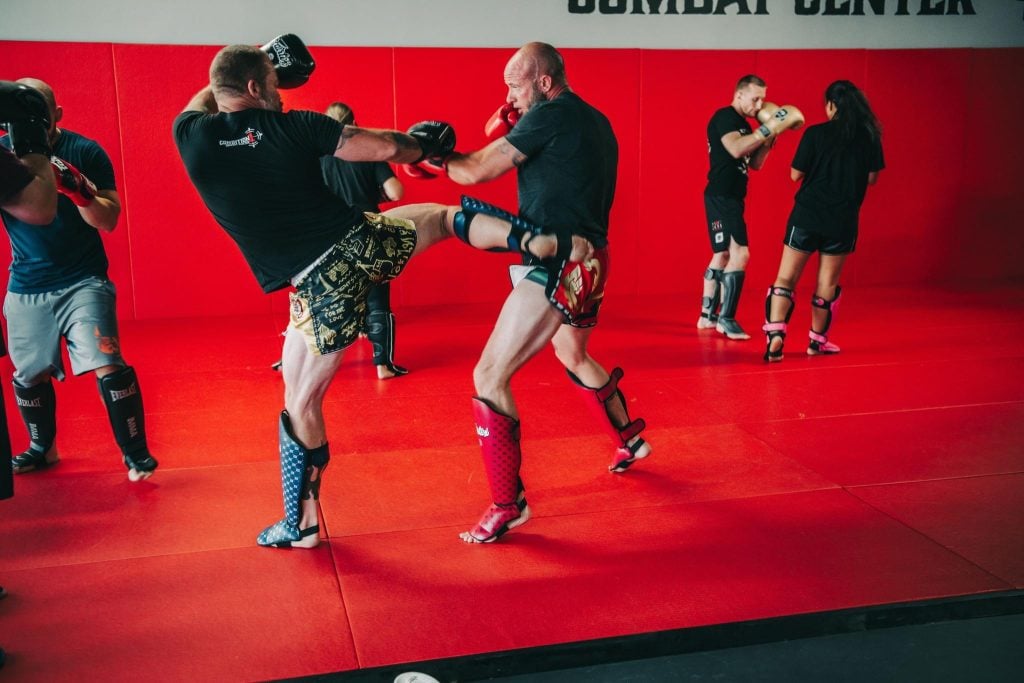
Getting started
If you are ready to test the fit, visit condition1combat.com and look for a trial option that lets you sample both self-defense and a core martial arts class. The schedule will list beginner-friendly times and any gear recommendations. Walk in early, tell the front desk you are new, and ask to meet your coach before class. Let them know why you are there. A good instructor will adjust the night so you leave with a win, whether that is a clean technical stand-up, a sharp boundary phrase that feels natural, or the first time you exit off a wall without freezing.
Condition 1 Combat Center adult martial arts training pairs well with family schedules. If you have kids, check the lineup for Condition 1 Combat Center kids martial arts and consider overlapping times so everyone builds the same language of posture, breath, and exit. That shared vocabulary shows up off the mats more than you might expect: a teenager using a boundary phrase at a game, a parent calmly redirecting a crowd bump in a parking lot, a family walk where everyone naturally scans corners and sightlines without paranoia.
Self-defense skill is built, not gifted. The path is straightforward when the environment is right. A handful of movements repeated under coaching, a culture that values control over ego, and a schedule you can uphold. If that sounds like the right start, take the next step and set your first class. The rest unfolds one round at a time.